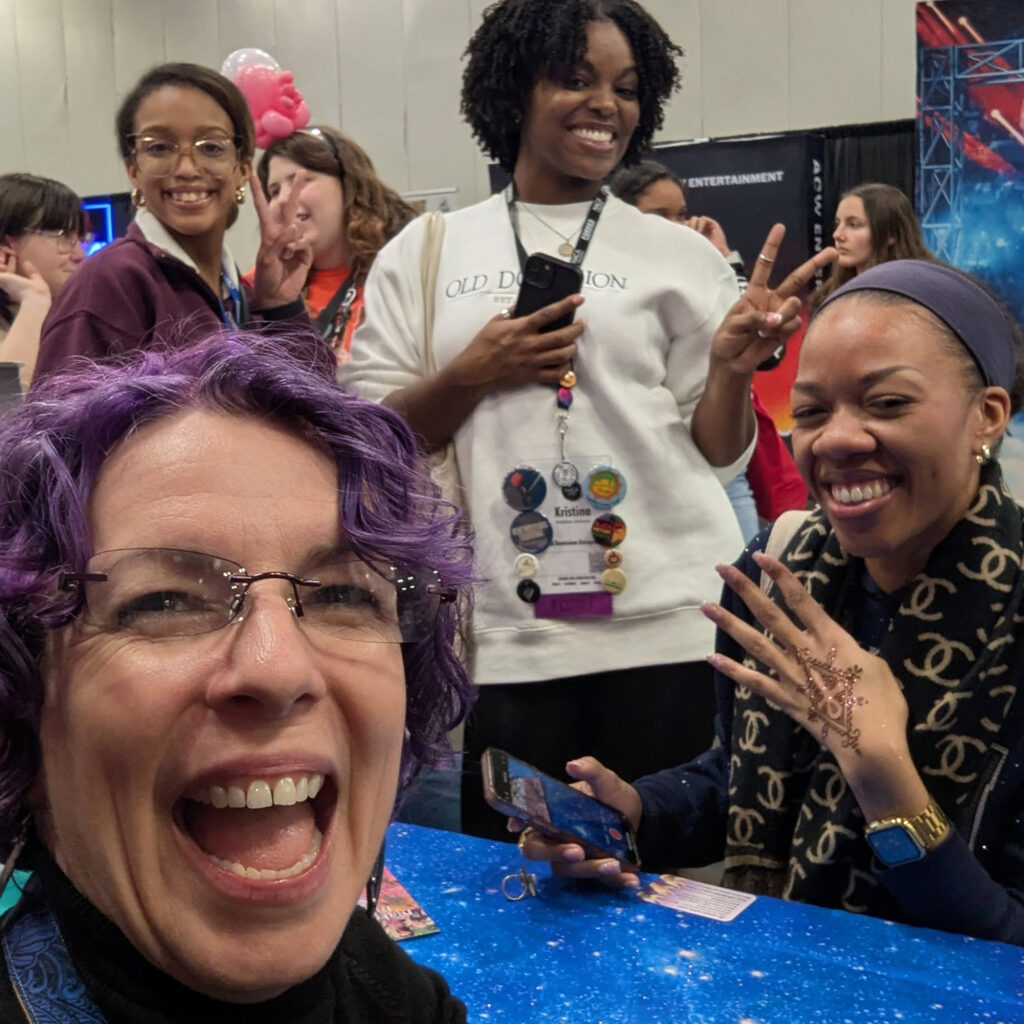
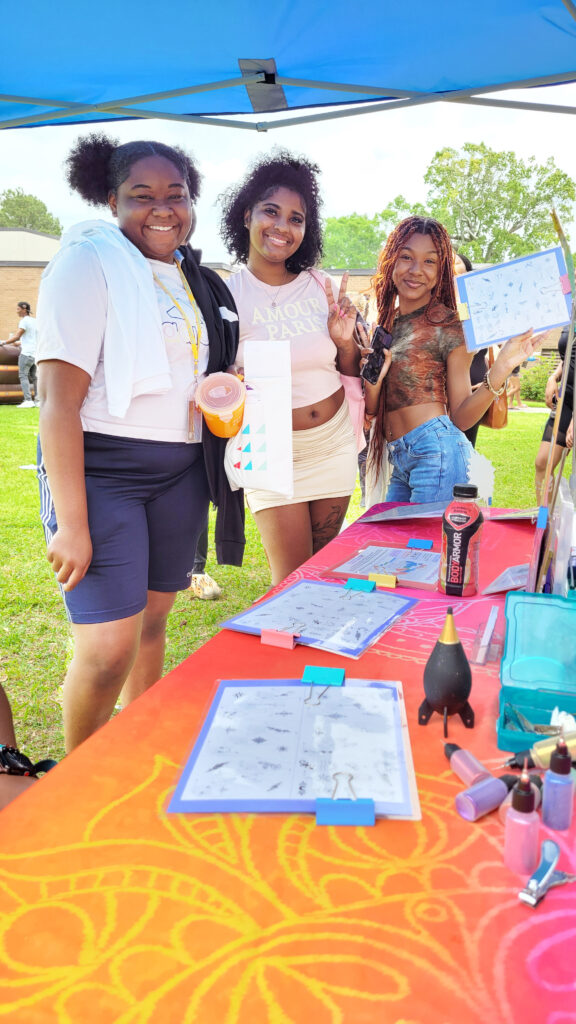
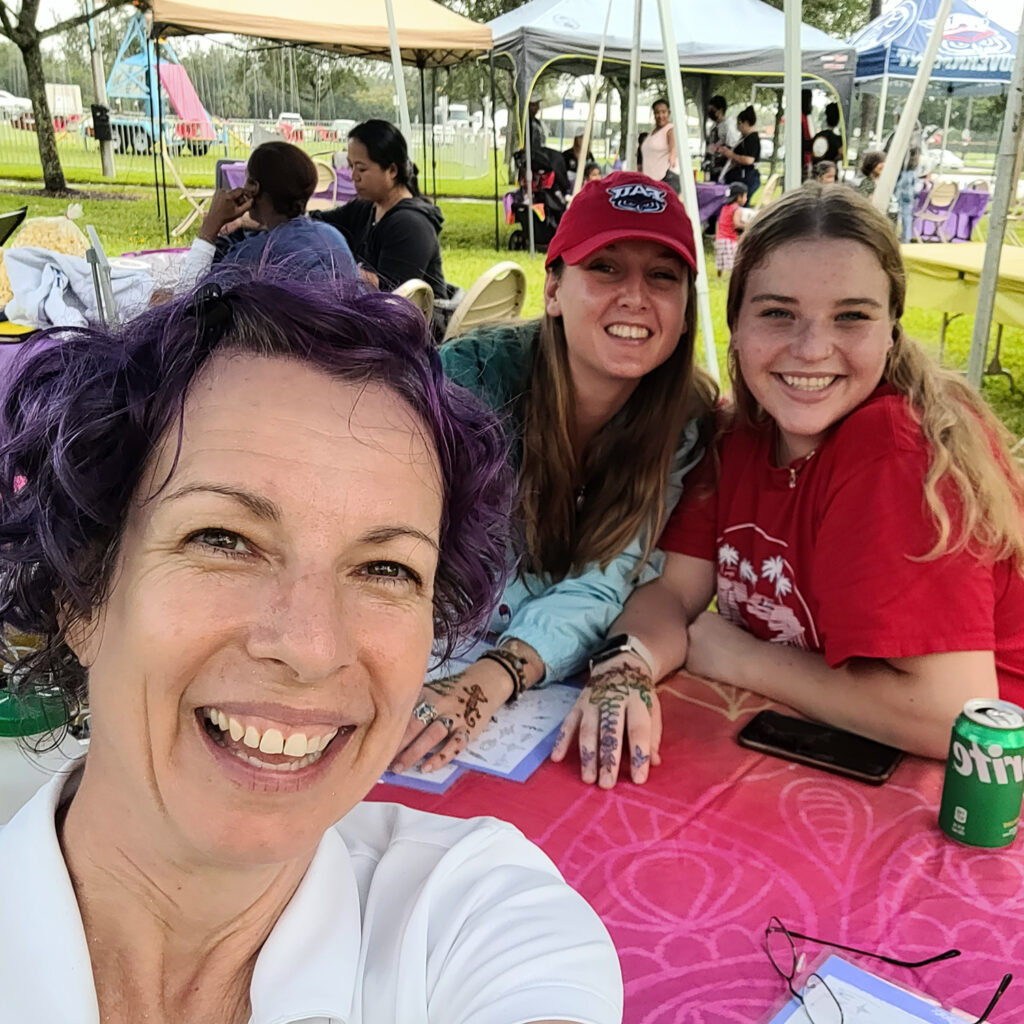
The booking process for campus henna events. It includes information on availability, coordination steps, what planners need to prepare, and how to schedule The Henna Experience team for college programming and student events.
December Isn’t Too Busy for Campus Events, It’s Just Different
There’s a common assumption that December is off the table for campus programming. Midterms are behind you, finals are looming, and everyone’s counting down to break, so the thinking goes that there’s no room left for another event. But that assumption is exactly why December is one of the most underused months on the campus calendar, not because there’s no appetite for events, but because most schools stop looking.
December Events Don’t Need to Be Big
The mistake a lot of planners make is assuming a December event has to look like a September or October event: a big campus-wide draw with heavy promotion and a lot of moving parts. It doesn’t. Some of the best December programming is small and low-lift, a table in the student union, a pop-up in the library lobby during Dead Week, something students can duck into for ten minutes between study sessions. Less planning, less budget, still a genuine win for student morale.
Finals Week Is Exactly Where Henna Fits
This is really the heart of it. Finals week is stressful by design, and most campuses already know they need some kind of de-stress programming to get students through it, therapy dogs, snack tables, stress ball giveaways. Henna belongs on that list. It’s a few quiet minutes of sitting still while something is done for you, not to you, a small, genuine break in a week that doesn’t offer many.
It also doesn’t require students to be “on.” No group activity, no performance, no pressure to talk to strangers. Just a chair, a design, and a few minutes where nobody’s asking them to think about their exam.
A Built-In Reason to Book
If your campus already runs any kind of finals de-stress week or Dead Week programming, henna is an easy addition to what you’re already doing, not a whole new event to plan from scratch. And if you don’t currently run anything like that, this is a good excuse to start.
Let’s get something on the calendar before the semester winds down. Carol at Everything But the Mime can help you figure out what works, carol@everythingbutthemime.com, 407-856-2412, or EverythingButTheMime.com.
Why You Should Book Fall Campus Entertainment Early
If there’s one thing we hear every fall, it’s some version of “we should have started this sooner.” Fall is one of the busiest season for campus programming, and that means the entertainers, artists, and vendors campuses want to book fill up their calendars months ahead of the actual events.
Why Fall Is So Competitive
Between Welcome Week, homecoming, family weekend, multicultural programming, and de-stress events leading into finals, most campuses are running some kind of event nearly every week from August through November. Add to that holidays like Halloween, Diwali, and Thanksgiving, that’s a lot of demand concentrated into a short window. Popular dates tend to get claimed early by whoever reaches out first.
What “Early” Actually Means
There’s no single magic number, but as a general rule, the further out you can lock in a date, the more flexibility you’ll have, both in scheduling and in what you’re able to plan around it. Reaching out a semester ahead gives you the most room to work with. Even a month ahead is far better than trying to book two or three weeks out, when your options may be limited to whatever dates happen to still be open.
It’s Not Just About Availability
Booking early doesn’t just protect your date, it gives you more room to plan a better event overall. You have time to coordinate with other departments, figure out budget approval without rushing it, promote the event properly so students actually know it’s happening, and make adjustments if your first-choice date doesn’t work out. Last-minute planning tends to mean last-minute compromises, and that’s true no matter how good the entertainment is.
A Simple First Step
You don’t need every detail finalized to start the conversation. Reaching out with a rough date range or even just “we’re planning something for October” is enough to get the process started and get a hold on your preferred timing while the rest of the details come together.
Ready to book? The earlier you reach out, the more options you’ll have for your fall calendar. Contact Carol at Everything But the Mime at carol@everythingbutthemime.com, 407-856-2412, or through EverythingButTheMime.com to start the conversation.
Halloween on campus tends to follow the same script every year: costume contests, pumpkin carving, maybe a haunted house if someone found the budget. All fun, all a little predictable. Henna gives you a way to shake that up without abandoning the spooky season vibe your students expect.
Seasonal Without the Cheese Factor
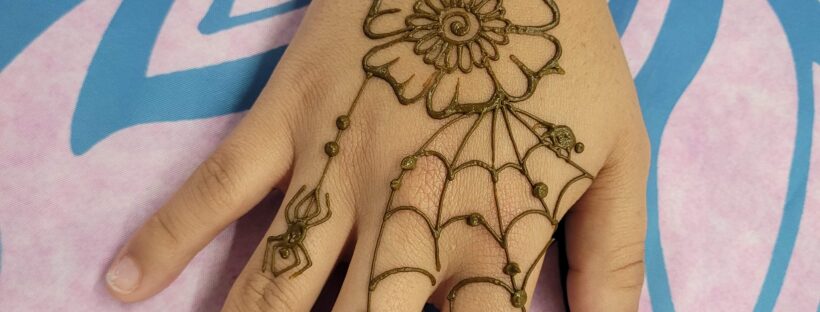
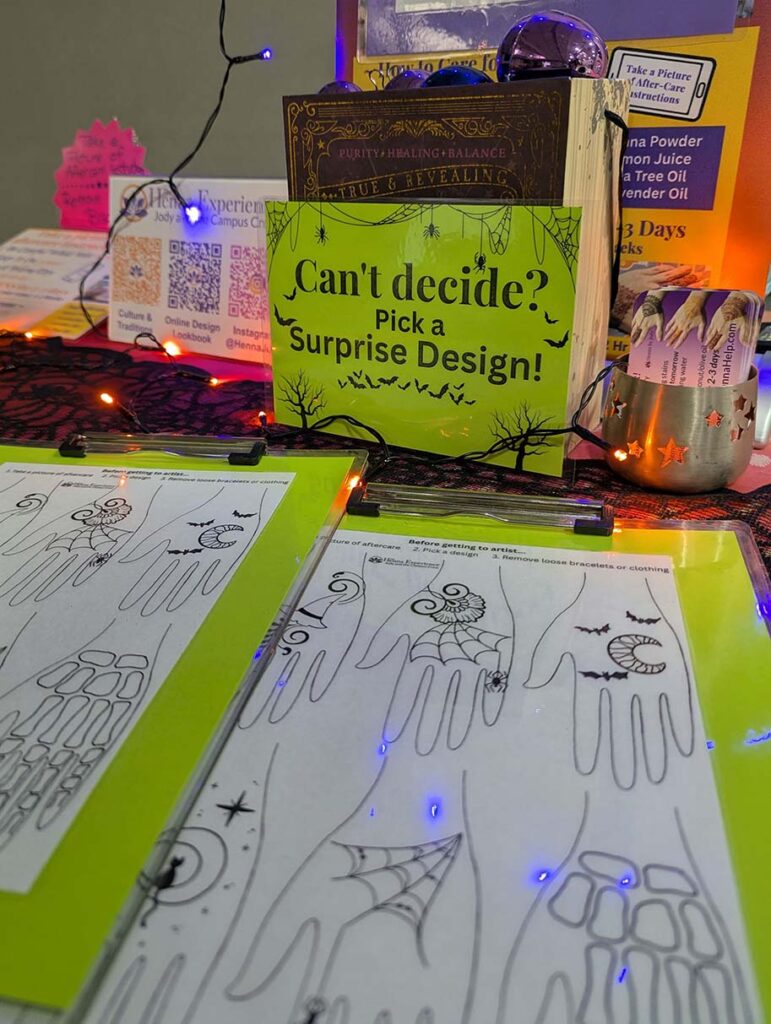
We LOVE spooky season here at The Henna Experience! We decorate our both and have a fun design menu with bats, moons, spiderwebs, and moodier motifs to give the season a stylish edge instead of a costume-store one.
A Break from the Candy Table
Most Halloween events lean hard on candy. Henna offers something different, an activity that holds attention rather than a quick grab-and-go, and gives students a reason to actually stick around your event instead of just passing through. Not to mention they get to enjoy their henna designs for a week or two!
An Easy Add-On
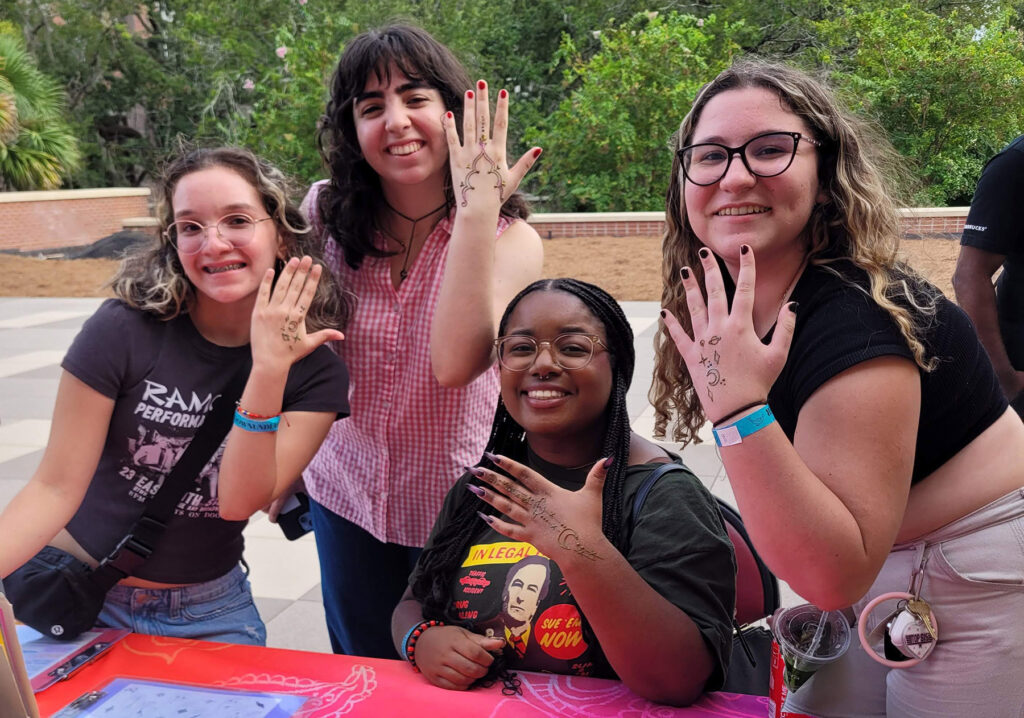
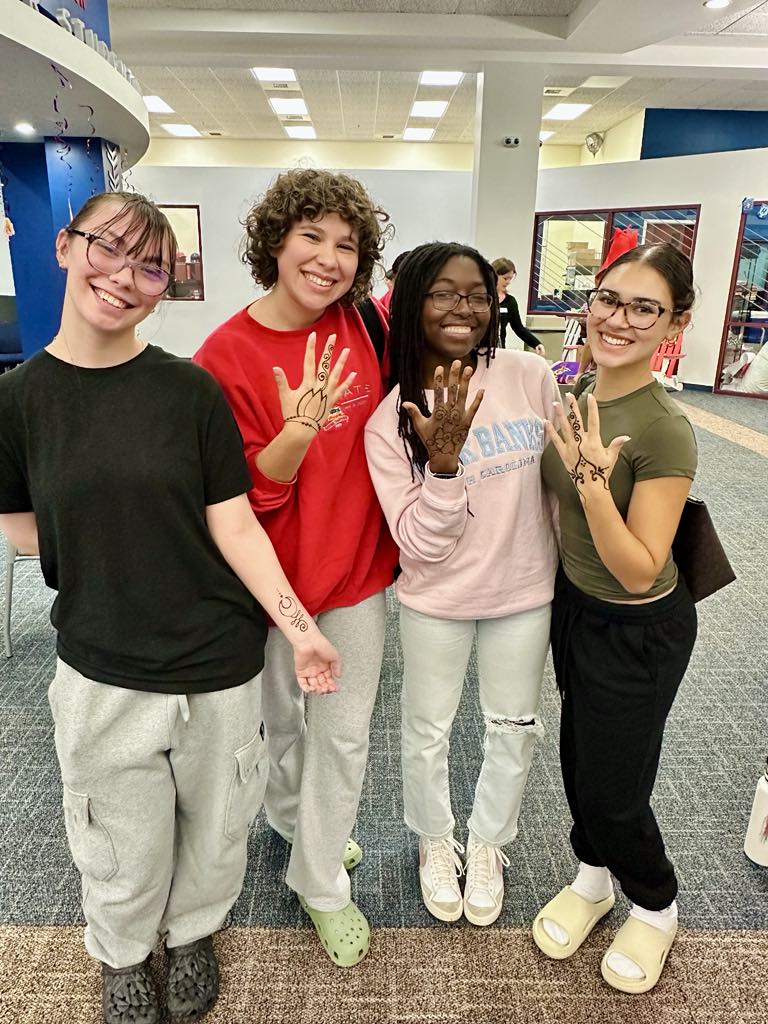
Already planning a costume contest, movie night, or trunk-or-treat? Henna slots in as an extra draw rather than something that needs its own time block. Henna is an attendance magnet! Students can swing by between activities and still walk away with something to show for the night.
Let’s find your date. October fills up quickly, so it’s worth getting on Carol’s calendar sooner rather than later. She’s at Everything But the Mime, carol@everythingbutthemime.com or 407-856-2412, or you can start at EverythingButTheMime.com.
If you’re planning fall events at a school in Florida, Texas, or anywhere else where “fall” mostly means slightly less humid instead of sweater weather, a lot of typical fall programming ideas just don’t translate. Pumpkin patches feel a little silly at 88 degrees. Bonfires are a hard no. But that doesn’t mean fall on your campus has to feel like just another regular week, it just means the activities need to fit the actual weather you’re working with.
Henna Works With the Heat, Not Against It
One of the advantages of henna as a warm-climate fall activity is that it doesn’t rely on any of the things that make traditional fall programming awkward in the South. No fire pits, no need for layers, no hot food sitting out in the sun. It’s a shaded table, a chair, and a few minutes of sitting still, which honestly feels pretty good when it’s still warm enough for shorts in late October.
It also holds up well outdoors in a way that suits the climate. Henna paste is applied, dries naturally, and doesn’t need much beyond a shaded spot to work well even on a warmer afternoon. Not to mention henna stains darker in the heat!
Leaning Into What Your Campus Actually Has
Warm-climate schools tend to have longer stretches of usable outdoor event time in the fall than schools dealing with an early frost, and that’s worth taking advantage of. Late afternoon and evening events, when the heat backs off a little, tend to work especially well. A henna table paired with string lights and a cooler evening slot can feel just as seasonal and festive as anything happening up north, just on your own terms.
A Different Kind of “Fall Feel”
Instead of chasing a New England version of fall that doesn’t fit your campus, warm-climate schools have an opportunity to build their own version of the season. Homecoming, family weekend, and multicultural programming still land in the same fall window regardless of climate, and henna fits all of them without needing a single flannel shirt or hay bale in sight.
Ready to book? Carol at Everything But the Mime works with campuses across the country and knows how to plan around warm-weather scheduling. Reach her at carol@everythingbutthemime.com, 407-856-2412, or through EverythingButTheMime.com.
Take a look at design options that work great for outdoor, warm-weather events at hennajody.com/themes/.
There’s a quiet assumption that shows up a lot when we talk to smaller schools: the idea that booking outside entertainment, especially something as specialized as henna, is really more of a “big university” thing. Bigger budgets, bigger crowds, bigger event teams. If that thought has crossed your mind while planning your next event, we’re here to clear it up: it’s not true, and some of our best events have been at small campuses and community colleges.
Size Isn’t the Point, Fit Is
Henna scales! That’s really the heart of it. A university with 30,000 students and a community college with 2,000 both get the same core experience: an artist, a table, a line of curious students, and designs that flex based on how much time each event has. The size of your campus changes the size of the crowd, not the quality of what happens at the table.
If anything, smaller events have their own upside. With a smaller, steadier flow of students, there’s often more room for bigger, more detailed designs, since the pacing isn’t as rushed as it might be at a high-traffic university event. Students at smaller schools sometimes end up getting an even more elaborate experience simply because there’s a little more breathing room in the line.
Budget-Friendly Doesn’t Mean Compromised
We know small campuses and community colleges are often working with tighter budgets and smaller event teams doing double or triple duty. That’s a reality we plan around, not a reason to think henna is out of reach. Carol at Everything But the Mime works with schools of every size to figure out what fits your event and your budget, and there’s no minimum campus size or student headcount required to make it worth booking.
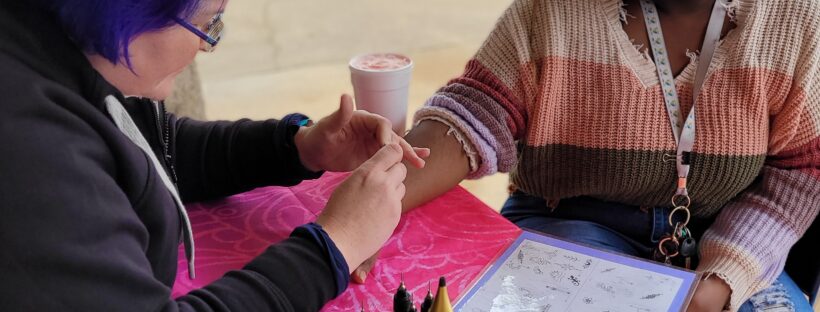
The henna table is self sustaining. It takes us about 20 minutes to set up and we organize the line start and even cut-off so students aren’t turned away at the end of the event. You have a table and 2 chairs for us and we do the rest!
Community Colleges Have Something Big Schools Don’t
There’s actually an advantage to smaller, tighter-knit campuses that’s easy to overlook: community. At a lot of community colleges, students, staff, and faculty cross paths constantly, which means an event like henna doesn’t just come and go, it becomes something people talk about around campus for weeks. Word travels fast on a small campus, in the best way.
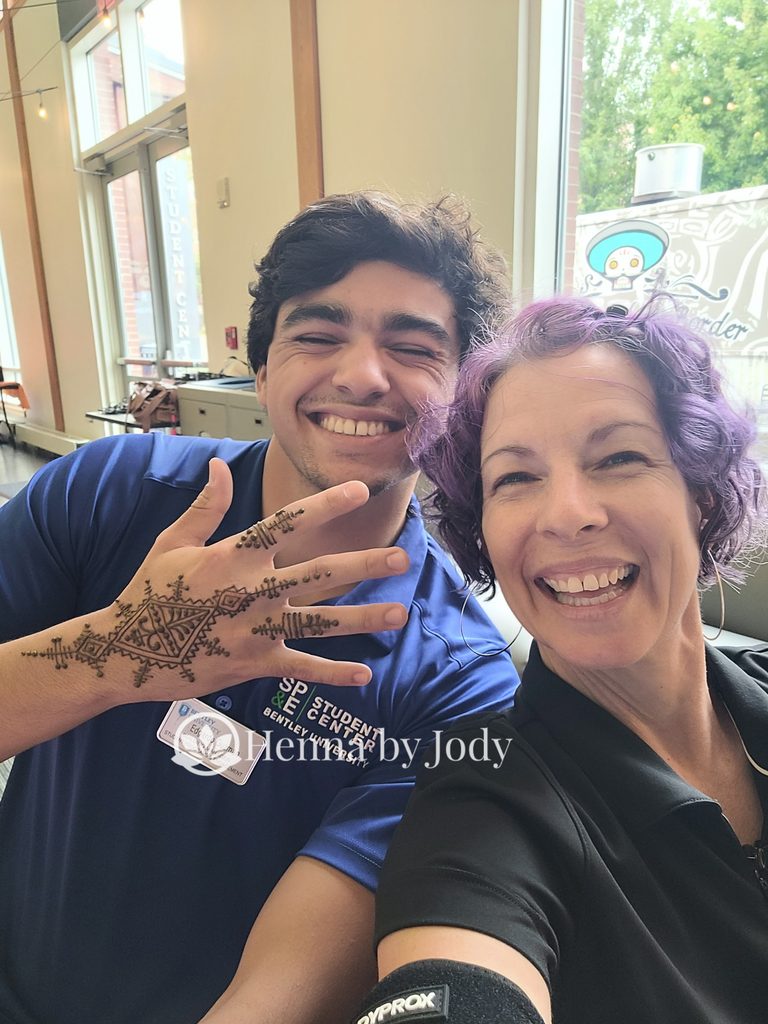
In fact, my most loyal schools are small campuses. The memories we create are lifetime memories and are woven into the fabric of the community.
You Don’t Have to Be a “Big Name” School to Book Us
Whether you’re planning a first-time event or you’ve never brought in outside entertainment before, the process is the same no matter your campus size. You don’t need a massive student activities budget or a name-brand school to get a great henna experience, you just need a date, a space, and a little bit of interest from your students.
Ready to book?
No campus is too small for Carol at Everything But the Mime to help plan your event!
If you work in student health or wellness, safety is probably the first question on your mind before any campus activity gets approved, and henna should be no exception. It’s a fair question, especially with so much conflicting information online about “henna” that isn’t really henna at all. Here’s a clear breakdown of what natural henna actually is, what to watch out for, and what to ask before you sign off on any henna vendor.
Natural Henna vs. “Black Henna”
This is the single most important distinction, and it’s the source of almost every henna safety concern you’ve probably heard about. Natural henna is made from the dried, ground leaves of the henna plant, mixed into a paste with things like lemon juice and essential oils. It stains skin a reddish-brown color and has been used safely for centuries.
“Black henna,” on the other hand, isn’t henna at all. It’s a mix that often contains PPD (paraphenylenediamine), a chemical dye that can cause serious allergic reactions, chemical burns, and skin sensitization, sometimes permanently. Black henna is where nearly all the scary news stories and cautionary tales come from, and it’s exactly what a reputable henna artist won’t use.
When you’re vetting a vendor, ask directly what’s in their paste. A legitimate artist will tell you without hesitation, and the answer should sound like a short, recognizable list of natural ingredients, not a shrug.
Even brown/red henna can be unsafe, so it’s important to know that your artist is mixing henna themselves. Most premade henna available online or at ethnic grocery stores contain kerosene or gasoline to make them self stable. Safe henna is perishable and must be stored frozen.
What’s in Our Henna Paste
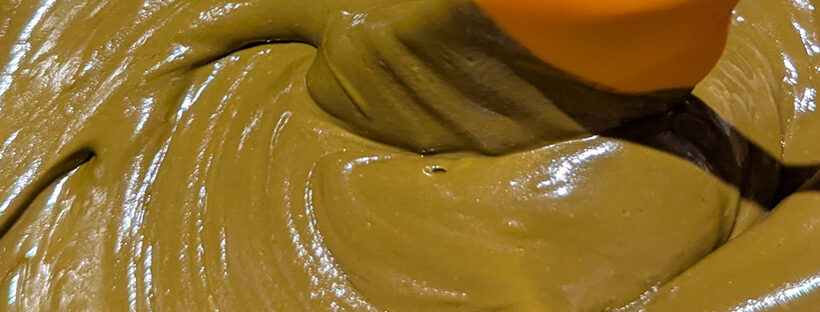
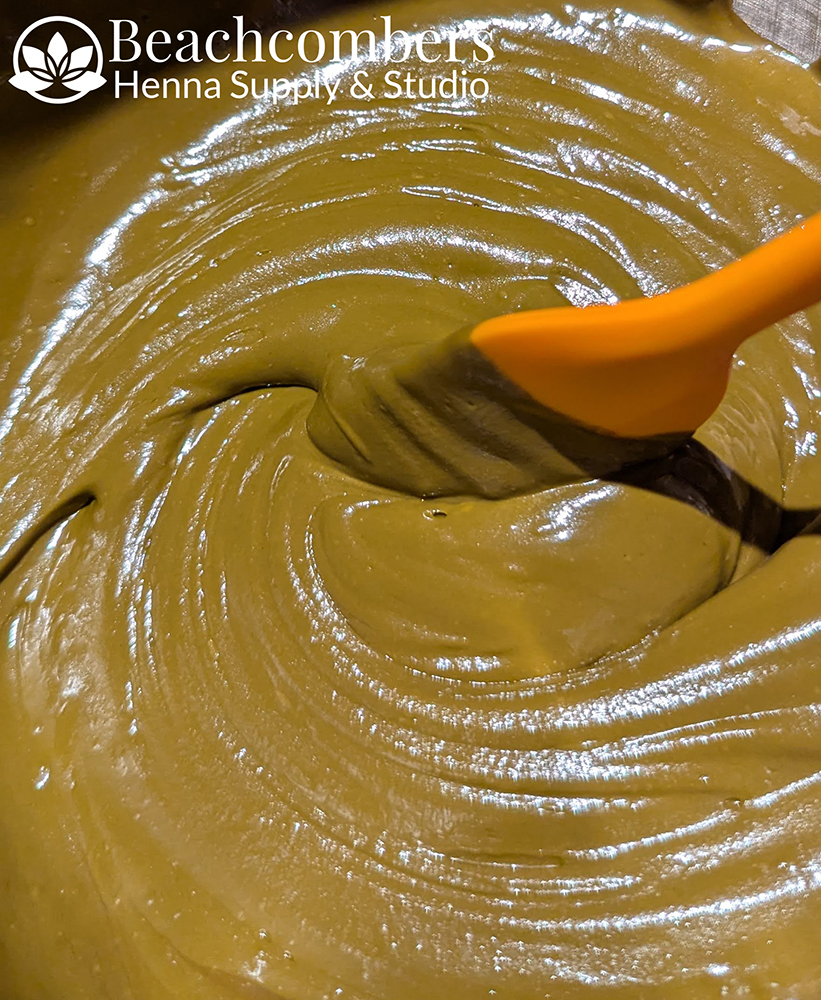
Our henna paste is made from henna powder, lemon juice, sugar, lavender oil, and tea tree oil. That’s it. No PPD, no chemical dyes, no shortcuts. It’s the same basic formula that’s been used in henna traditions for generations, and it’s what allows us to stand behind the safety of what we’re putting on students’ skin.
Allergies and Sensitivities
Even natural henna can occasionally cause a reaction in someone with a sensitivity, most commonly to the essential oils used in the paste rather than the henna itself. This is very rare. Ww use lavender and tea tree oils precisely because they are safe and common. If someone is sensitive to one of these oils, chances are they know it.
What to Ask Before You Book
A few good questions to have on hand when vetting any henna vendor for your campus:
What ingredients are in your henna paste?
Do you use anything labeled “black henna” or any pre-mixed cones?
How long have you been practicing henna?
Can you provide a COI. If an artist isn’t insured, you shouldn’t use them.
The answers should be specific, confident, and easy to follow. If a vendor gets vague or defensive about ingredients, do NOT hire them.
Health and wellness offices have every right to ask hard questions before signing off on any activity, and a legitimate henna artist should welcome that scrutiny, not avoid it. Being able to answer these questions clearly is part of what makes an event easy to approve and safe to run.
Ready to book?
If your office has safety questions before approving an event, Carol at Everything But the Mime can help coordinate details, or you’re welcome to ask us directly.
Henna Ideas for Welcome Week: Starting the Semester with Something Memorable
Welcome Week is a lot of things at once. It’s move-in chaos, name tags, icebreakers, and a hundred tables all competing for the same wide-eyed freshmen. So when you’re picking activities, you want something that actually cuts through the noise, not just another table with candy on it.
Henna does that!
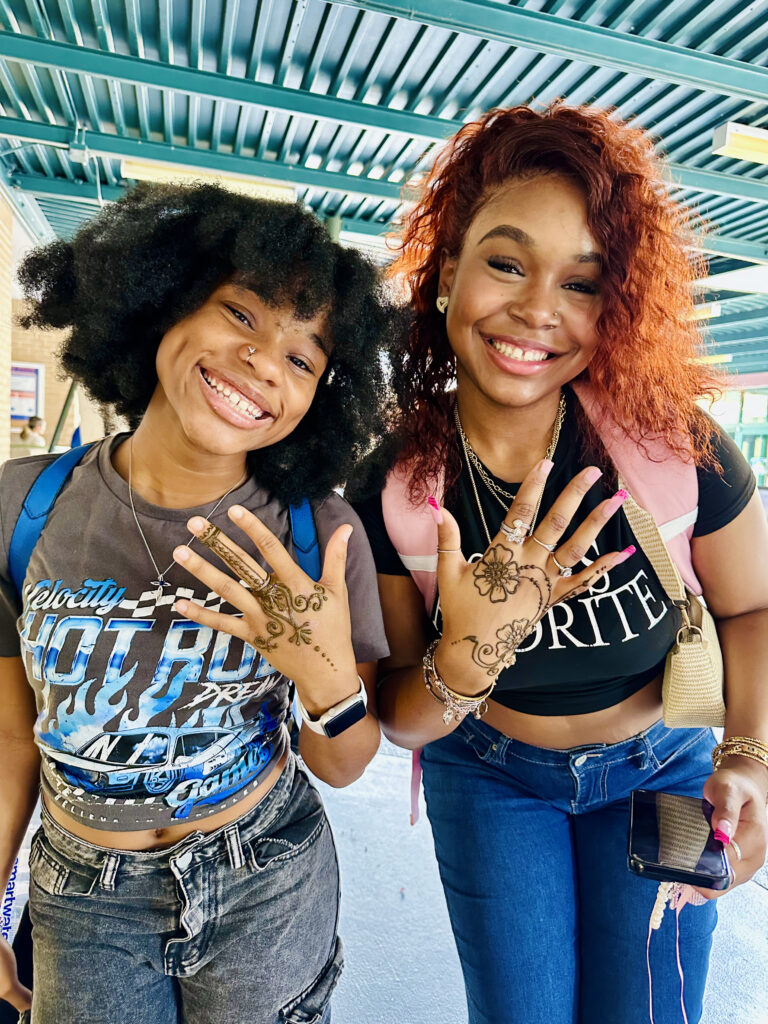
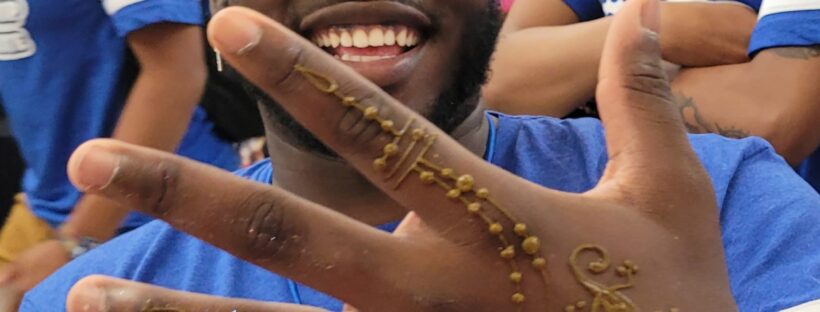
Here’s why it works so well for the first week of school: it’s slow enough to be an experience but fast enough to keep a line moving, it’s visually striking in every photo a student posts (and they will post it), and it gives students something to carry with them for the next couple weeks, a literal reminder that they showed up and tried something new on day one!
Setting the Tone Early
The real icebreaker moment happens before anyone even sits down. Students end up in line together, pointing out designs they like, comparing notes on the design book, asking each other “wait, are you getting that one too?” It’s a built-in conversation starter for a week where most students don’t know anyone yet, no forced small talk required, just two people excited about body art they are about to get!
It also signals something bigger about your campus: that there’s room for art, culture, and a little bit of wonder in the middle of syllabus week. That’s a good first impression to make.
Where It Fits in Your Welcome Week Lineup
Henna works well as its own standalone event, but it also slots easily into bigger Welcome Week traditions, activities fairs, block parties, the first big lawn event of the year. Since we can adjust pacing on the fly (quicker designs during a busy rush, bigger ones when things slow down), it flexes to whatever else is happening around it.
A Small Thing That Sticks
Here’s the part that matters most: a couple of weeks from now, syllabus week will be a blur, but that henna design fading on someone’s hand will still be a little reminder of their first week on campus. That’s a nice thing to be part of.
Henna vs. Airbrush Tattoos: Which Is Right for Your Campus Event?
If you’re planning a campus event and weighing your entertainment options, chances are henna and airbrush tattoos have both landed on your shortlist. They’re two of the most requested interactive experiences on college campuses, and for good reason: both are visual, personal, and give students something to show off after the event ends. But they’re not the same experience, and picking the right one (or the right combination) depends on your event, your budget, and what you want students walking away with.
What Makes Henna Different
Henna is a temporary body art made from a plant-based paste, applied freehand in intricate designs that stain the skin. It’s rooted in centuries of cultural tradition across South Asia, the Middle East, and North Africa, which gives it a storytelling element that other body art doesn’t have. Students aren’t just getting a design, they’re getting a small window into a living tradition, and that context tends to stick with people.
Getting a little education with your novelty is a great bonus!
Henna also has staying power in a very literal sense. Depending on skin type and aftercare, a henna design can last one to three weeks, which means your event keeps generating conversation and visibility on campus long after the tables are packed up.
On the practical side, with the Henna Experience, henna moves faster than people expect. At a typical campus event, each design takes about 2 to 3 minutes (About 20 people per hour per artist), keeping the line steady and predictable for planning purposes. If there’s a lull, that time gets put right back into the designs: students who arrive during a quieter stretch get to enjoy a larger, more detailed piece. It’s a system that naturally adjusts itself to your event’s traffic, fast when it needs to be, more elaborate when there’s room for it.
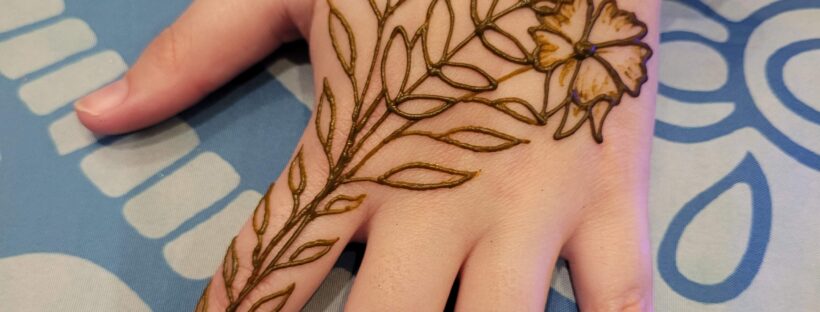
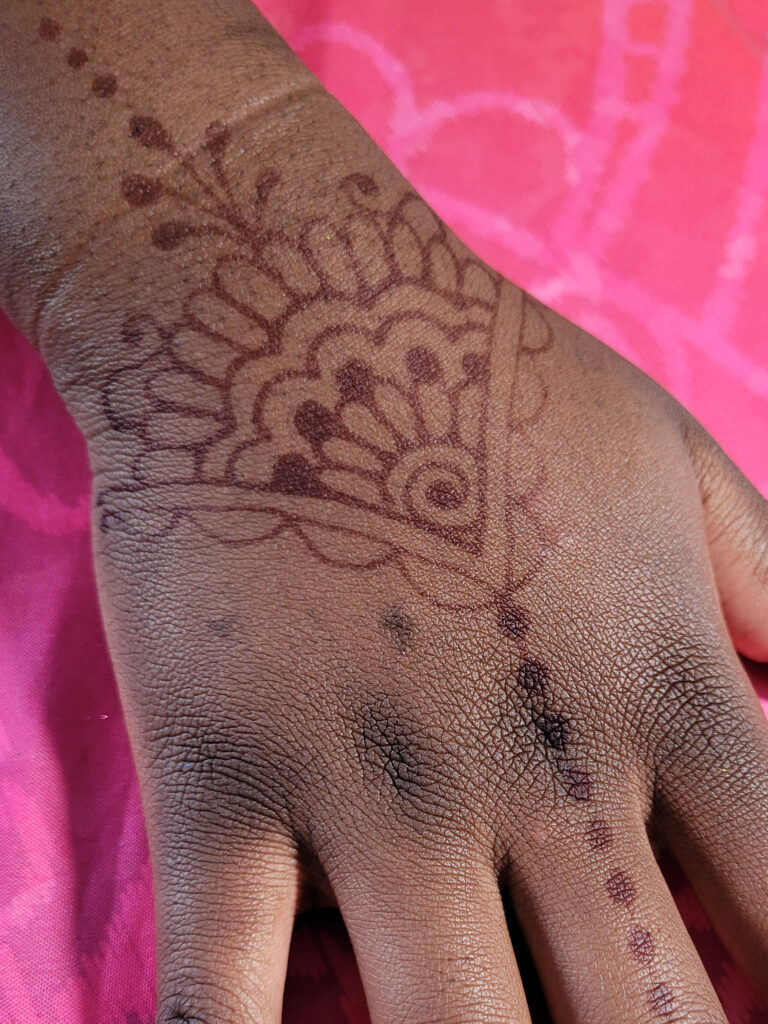
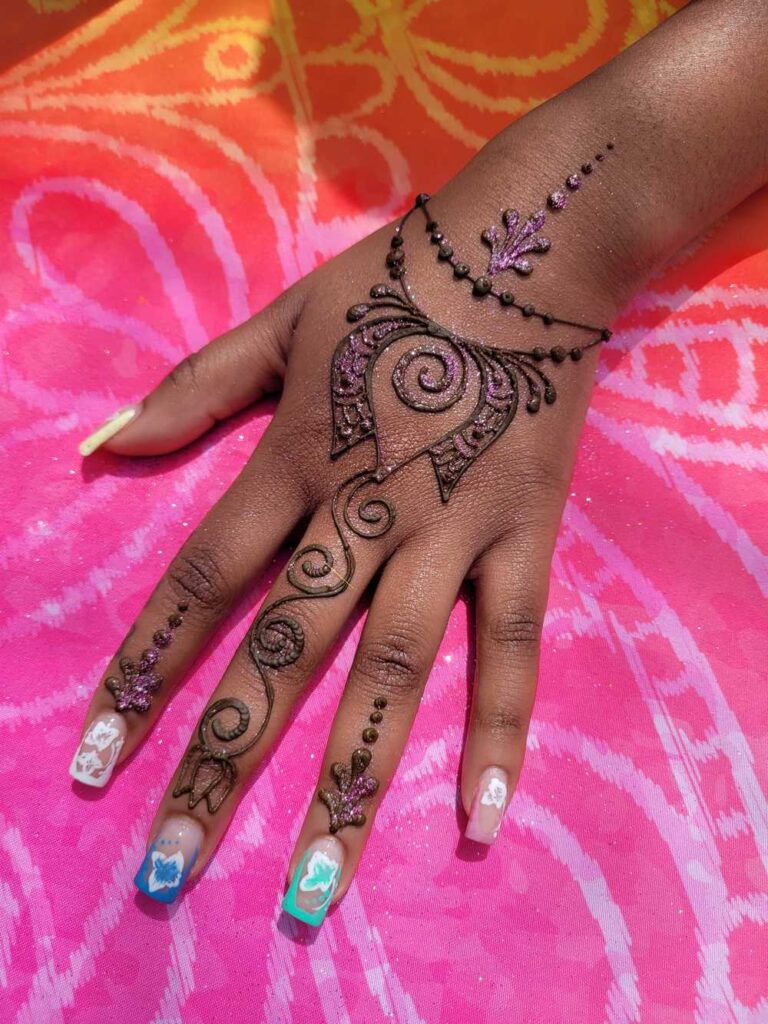
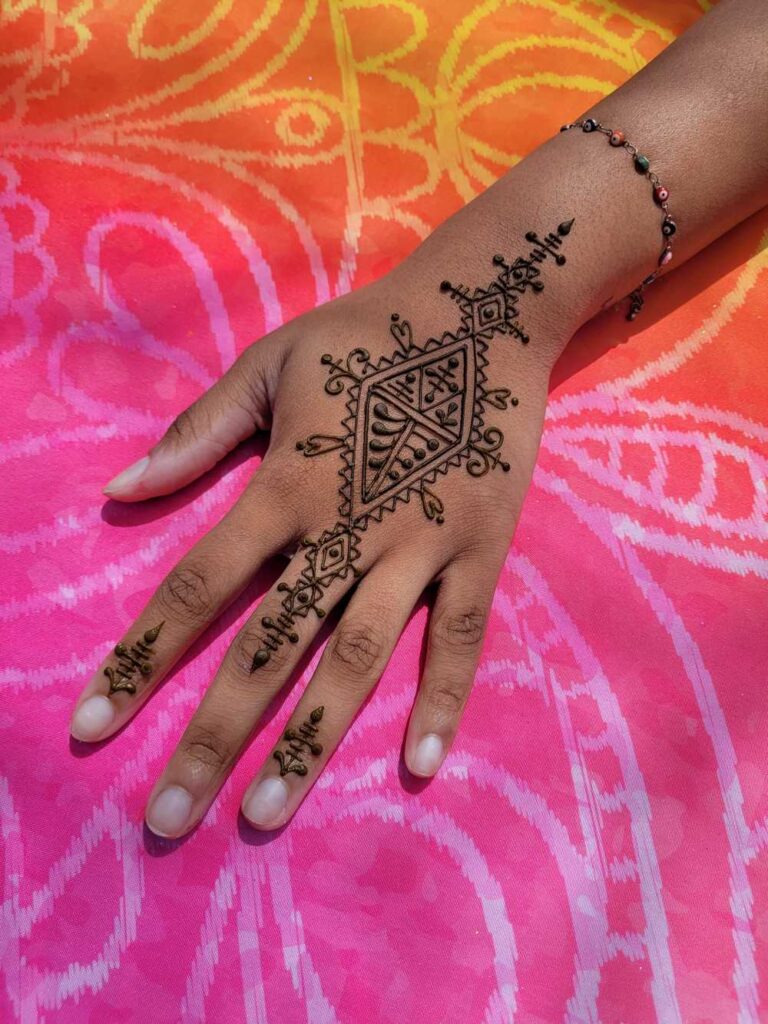
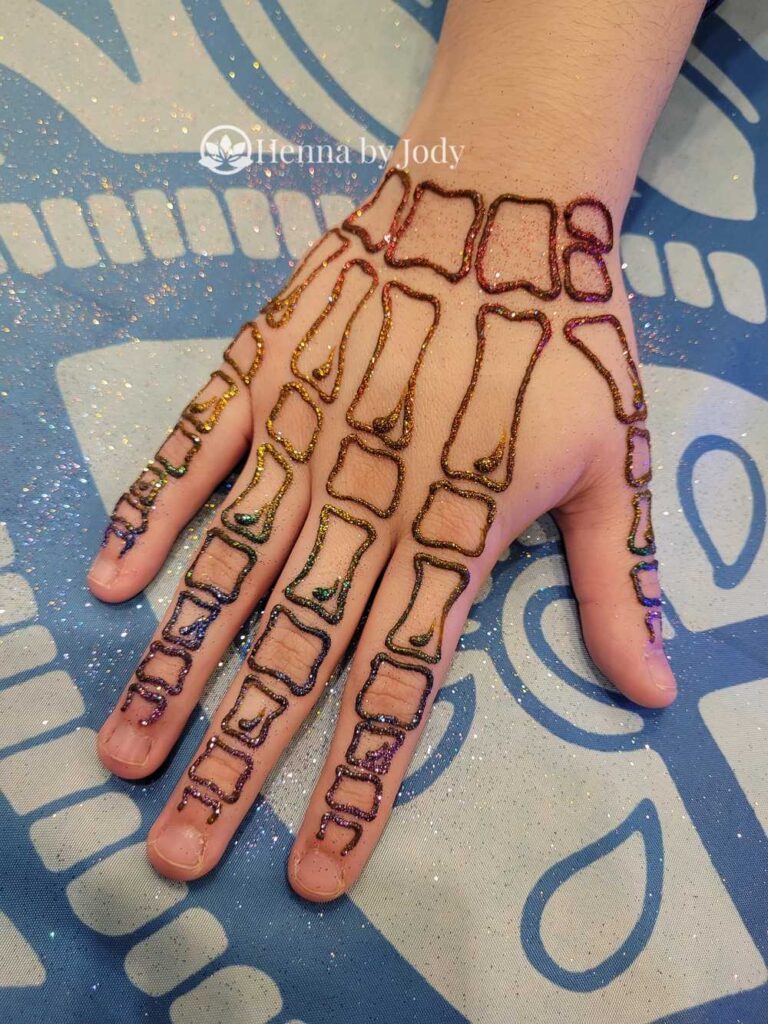
Henna is also done freehand, so you aren’t limited to stencils. This makes the art very unique and personal to the student, and allows the freedom to match your event theme.
What Makes Airbrush Tattoos Different
Airbrush tattoos use a stencil and spray technique to apply temporary designs quickly, usually in bold colors and graphic styles. They tend to wash off within a few days, sometimes sooner, which makes them a lower-commitment option for students who want something fun without the longer-lasting stain.
Speed is the biggest advantage here. Airbrush artists can typically move through a line just as quickly and sometimes faster for very simple designs. If you’re expecting a high-traffic event with a short window, like a tabling event between classes, airbrush gives you another fast option to keep students moving through.
Where They Actually Overlap
Here’s the part planners don’t always realize: henna and airbrush aren’t competing for the same student. Some students want a design that lasts and carries meaning, others want something quick, colorful, and low commitment.
When you offer both, you’re not splitting your audience, you’re covering more of it.
Pairing them also solves a logistics problem. Instead of one long line, you can split that up into two shorter lines. Make the absolute most of your event and book more than one henna or airbrush artist.
Henna’s slightly longer per-student time and it’s popularity can create demand and traffic to your event, and having airbrush available alongside it gives more students a way to still walk away with some body art. It’s a natural flow: the henna table draws people in for the experience, the airbrush table keeps the line moving.
For big draws like Welcome Week, Family Weekend, or multicultural programming events, having both on-site also just makes your event feel more robust. More variety, more reasons for students to stop by, more photo-worthy moments for your event recap.
So Which Should You Book?
If you are looking to drive traffic to your event and add an educational element, henna is the biggest bang for your buck. If you’re running a high-volume event with limited time per student and want something fast and colorful, airbrush might be a good fit on its own. And if you want to maximize turnout and give students real choice, running them side by side is worth the conversation.
There’s no wrong answer here, just the right fit for your event’s size, pace, and goals.
Ready to book?
Reach out to Carol at Everything But the Mime and she’ll help you figure out what makes sense for your event, whether that’s henna, airbrush, or both together.
Email her at carol@everythingbutthemime.com or call 407-856-2412. You can also find everything at EverythingButTheMime.com.
Curious what type of henna designs you can get? Take a look at a range of themed designs at hennajody.com/themes/.
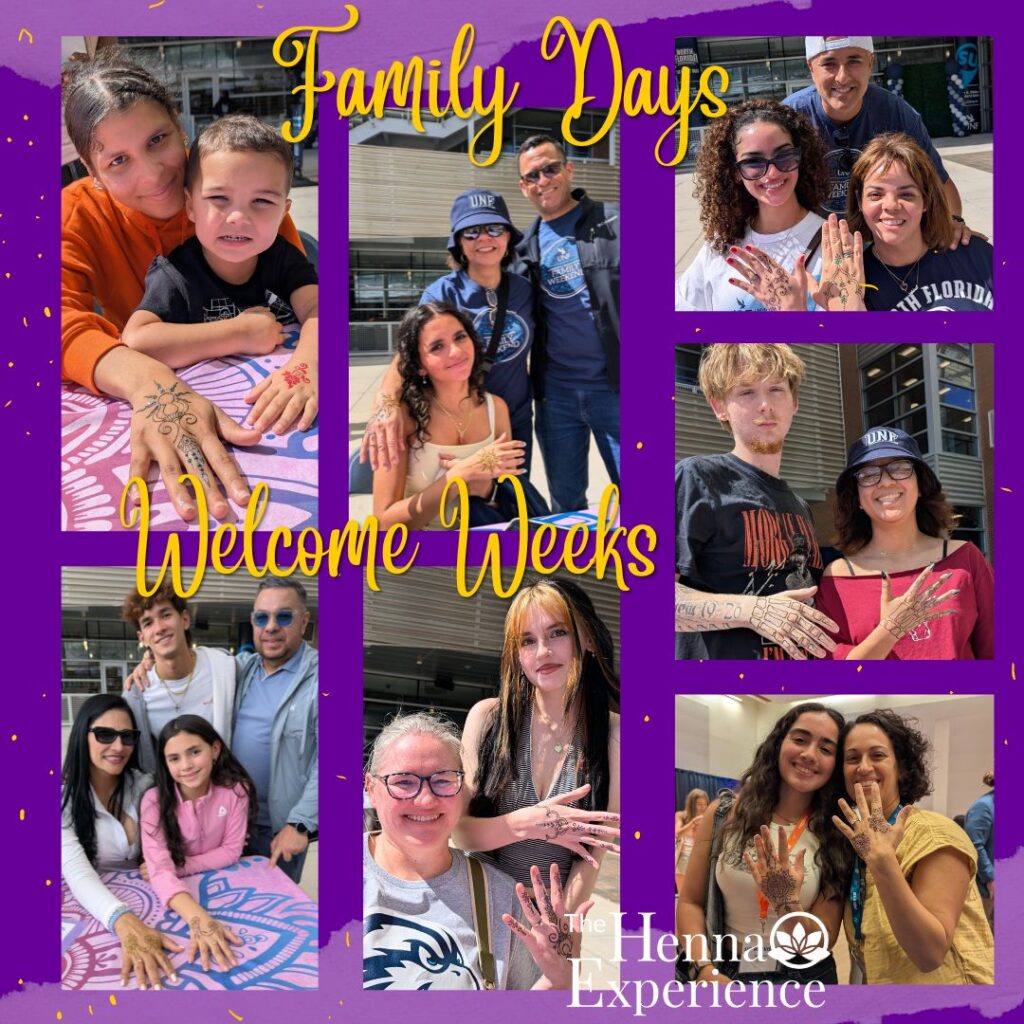
Family Day events ask a lot of campus event coordinators. You need something that appeals to eight-year-old siblings and grandparents in the same afternoon, something that photographs well for the college’s social media, and something that doesn’t require a huge footprint or complicated setup.
The Henna Experience checks every one of those boxes.
An activity that works for the whole family
One of the biggest challenges of Family Day programming is finding activities with real cross-generational appeal. Henna solves this naturally. Older kids and adults love sitting down for an intricate, temporary henna design on their hand or arm: a piece of body art they get to wear home as a souvenir of the day. For younger children who aren’t quite ready for henna (henna is for ages 8 and up), we bring glitter tattoos along too, so nobody gets left out. Everyone in the family, no matter their age, walks away with something to show off.
Live henna art that draws a crowd
Henna is inherently visual. Watching an artist freehand an intricate design is the kind of thing that naturally draws people over, and it keeps a steady flow of visitors at your event without needing an announcer or a big sign. It’s the kind of activity guests end up talking about after the day is over, and the kind that shows up in the photos parents share on social media, tagging the school.
A story guests tell again and again
Two comments come up more than almost any other at these events. The first is from guests trying henna for the first time: they’ve always wanted to get henna done but never had the chance, so sitting down at the booth becomes a small bucket list checkoff, something new and a little exciting to try.
The second comes from guests who remember getting henna on family vacations, maybe on a beach trip or while traveling abroad, and getting a design again brings back that same sense of nostalgia, right there on your campus.
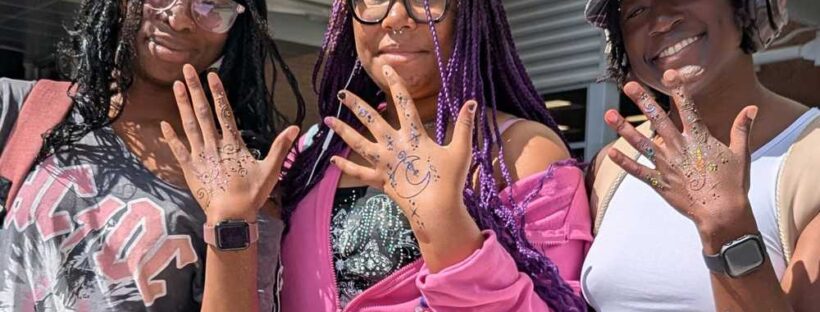
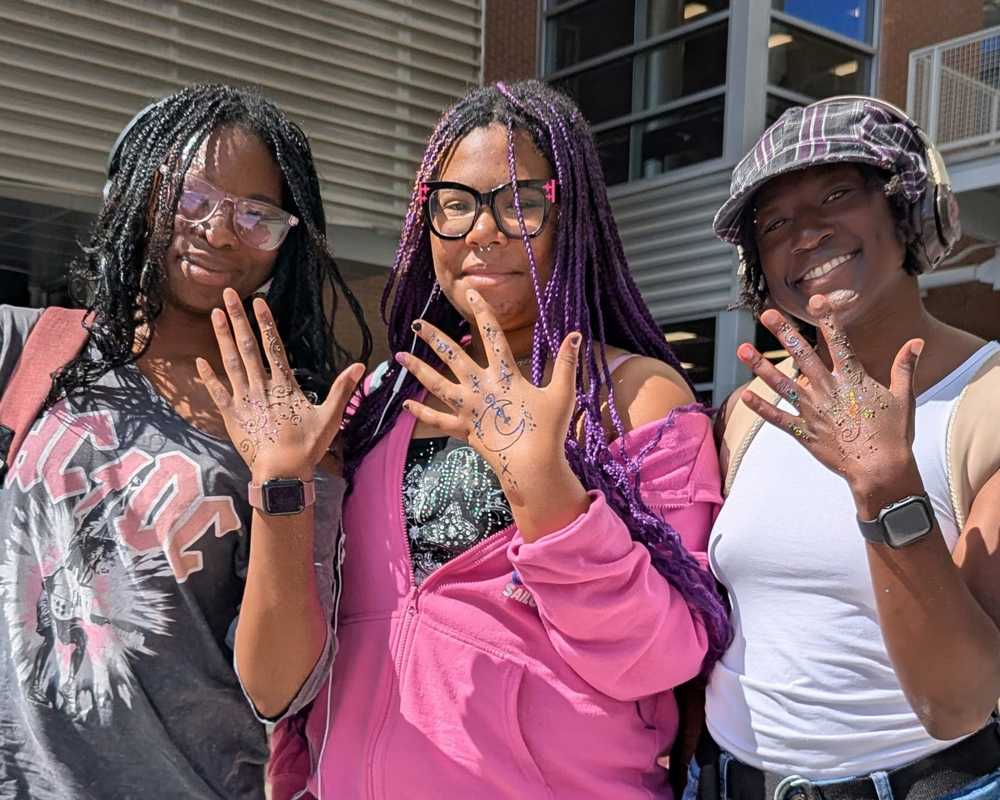
Between the first-timers and the ones reliving a favorite memory, The Henna Experience has a way of making your Family Day feel personal for every guest who stops by.
Backed by real experience
The Henna Experience has been practicing and perfecting this craft since 1999. That means campus coordinators aren’t taking a chance on an unknown vendor. They’re booking from a team of artists who has spent decades refining technique, working events of all sizes, and understanding what makes a booth run smoothly at a busy family event: efficient lines, eye catching setup, and personalized designs that create memories.
Simple to book
Booking The Henna Experience for your Family Day event is handled through Everything But the Mime (EBTM), so coordinators get the ease of working with an established entertainment booking company alongside the specialized artistry of a dedicated henna and glitter tattoo professional. Reach out to Carol at EBTM to check availability and get a quote for your event date.
Henna is one of the most consistently engaging activities we see on college campuses, but not all henna event setups are the same. You want to create a MEMORY!
From a campus programming perspective, the quality of the experience depends on much more than whether the designs look good in photos.
When booking henna artists for a college event, there are several important factors that directly affect student safety, event flow, and the overall professionalism of the experience.
At The Henna Experience, these are the areas we believe matter most.
Ask about henna safety first
One of the most important questions a campus should ask is what type of henna is being used and who prepares it.
Professional natural henna should be mixed by the artists themselves using body art quality ingredients. Pre-made or grocery-store products can create unnecessary risks, especially at public events.
We often assume all henna is the same, but there is a major difference between natural henna paste and products containing unsafe additives. This is serious. We are not talking about skin sensitivities here. Unsafe henna can cause permanent liver and kidney damage. ONLY get henna from someone mixing it themselves.
A professional henna team should be able to clearly explain:
What ingredients are used
Who makes the henna paste
How the paste is stored
Proper aftercare instructions
Safety should never be treated as an afterthought at a campus event.
The Henna Experience ONLY uses safe hand-mixed henna! All of the henna paste we use is mixed by Jody. Our ingredients are henna powder, lemon juice, lavender oil, tea tree oil, and sugar.
Experience matters beyond artistic skill
Good event henna requires more than being able to create beautiful designs. You want a vibe, right?
Campus events move quickly and involve constant interaction with students, staff, and changing crowd flow. Artists need to be able to work efficiently while maintaining the vibe you want.
Experienced event artists understand how to:
Adjust design pacing during rushes
Communicate clearly with students
Keep lines moving smoothly
Maintain quality under pressure
That type of experience makes a difference in how the event feels overall.
Professionalism affects the entire event atmosphere
Henna stations are often placed in highly visible areas of campus events. The artists representing the service become part of the overall atmosphere of the program. The Henna Experience will match your event theme!
A fun professional presentation matters.
That includes:
Organized setup
Clean workstations
Positive student interaction
Appropriate communication
Reliable arrival and breakdown procedures
Event coordinators should not have to manage the henna station once the event begins. A professional team should operate independently while integrating smoothly into the larger event.
Line control is one of the biggest factors in event success
Henna naturally attracts attention, which is great for engagement but can become difficult if flow is not managed properly.
A well-run station should have:
Clear design options
Artists who can adapt pacing as needed
A way to cut the line as the event winds down so students aren’t turned away after waiting
At The Henna Experience, our team continuously adjusts based on turnout and traffic patterns. When lines increase, we shift toward faster application styles while still maintaining a strong student experience.
We have a way to cut the line so that your event ends on time, and students don’t wait in line for an hour only to be turned away.
Student interaction is part of the experience
Students remember more than just the final design. It’s about creating a memory.
The interaction itself is part of what makes henna successful on college campuses. A great artist can completely change the energy around the station.
Students often ask questions about:
Henna traditions
Design styles
Stain process and aftercare
Cultural background of the art form
Artists who can answer those questions comfortably and respectfully help create a more meaningful experience overall.
I get such a thrill when a student pulls up a picture of the henna I did on them last year, so talks about the symbology they learn from me. It reminds me that we created a memorable experience.
The right henna team makes campus events easier to manage
For event planners, the best campus vendors are the ones who combine strong student engagement with smooth operational flow.
A professional henna team should:
Prioritize safety
Communicate clearly
Adapt to changing traffic
Interact well with students
Operate independently within the event space
Those details are what separate a simple activity from a genuinely successful campus experience.
At The Henna Experience, our goal is to create henna events that are organized, engaging, safe, and easy for campuses to host from start to finish. We create student memories!
For college and university event bookings, visit Everything But The Mime. Carol and Sheri can assist with scheduling, artist availability, and quotes.