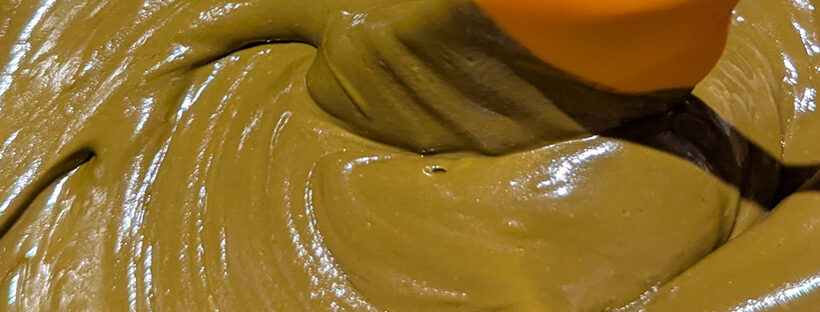
Freshy mixed ORa henna paste in a bowl with a spatula.

Is Henna Safe? What Campuses Need to Know

If you work in student health or wellness, safety is probably the first question on your mind before any campus activity gets approved, and henna should be no exception. It’s a fair question, especially with so much conflicting information online about “henna” that isn’t really henna at all. Here’s a clear breakdown of what natural henna actually is, what to watch out for, and what to ask before you sign off on any henna vendor.

Natural Henna vs. “Black Henna”

This is the single most important distinction, and it’s the source of almost every henna safety concern you’ve probably heard about. Natural henna is made from the dried, ground leaves of the henna plant, mixed into a paste with things like lemon juice and essential oils. It stains skin a reddish-brown color and has been used safely for centuries.

“Black henna,” on the other hand, isn’t henna at all. It’s a mix that often contains PPD (paraphenylenediamine), a chemical dye that can cause serious allergic reactions, chemical burns, and skin sensitization, sometimes permanently. Black henna is where nearly all the scary news stories and cautionary tales come from, and it’s exactly what a reputable henna artist won’t use.

When you’re vetting a vendor, ask directly what’s in their paste. A legitimate artist will tell you without hesitation, and the answer should sound like a short, recognizable list of natural ingredients, not a shrug.
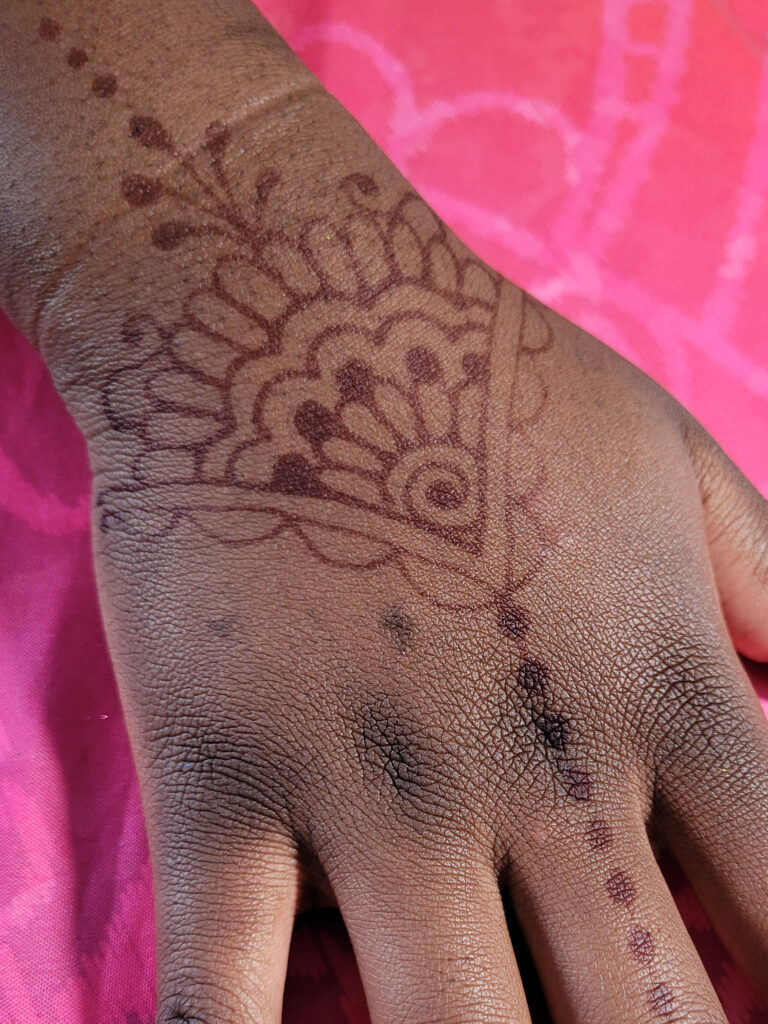
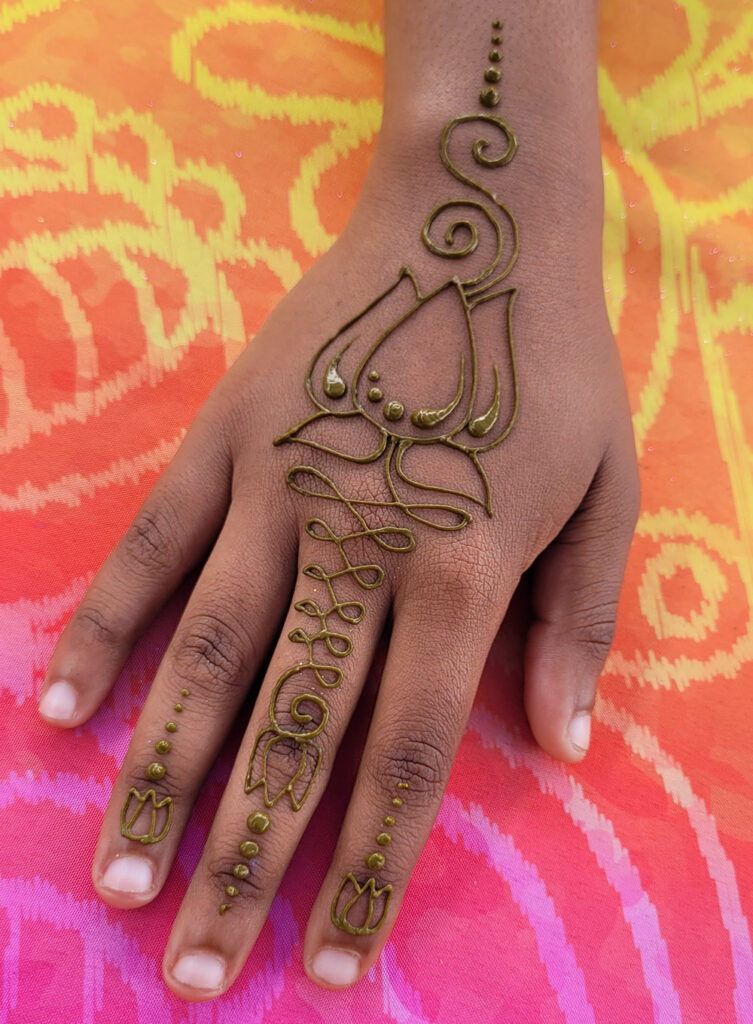
Burgundy henna stain on a hand with brown skin. Bright pink background.

Even brown/red henna can be unsafe, so it’s important to know that your artist is mixing henna themselves. Most premade henna available online or at ethnic grocery stores contain kerosene or gasoline to make them self stable. Safe henna is perishable and must be stored frozen.

What’s in Our Henna Paste

Our henna paste is made from henna powder, lemon juice, sugar, lavender oil, and tea tree oil. That’s it. No PPD, no chemical dyes, no shortcuts. It’s the same basic formula that’s been used in henna traditions for generations, and it’s what allows us to stand behind the safety of what we’re putting on students’ skin.

Allergies and Sensitivities

Even natural henna can occasionally cause a reaction in someone with a sensitivity, most commonly to the essential oils used in the paste rather than the henna itself. This is very rare. Ww use lavender and tea tree oils precisely because they are safe and common. If someone is sensitive to one of these oils, chances are they know it.

What to Ask Before You Book

A few good questions to have on hand when vetting any henna vendor for your campus:

  • What ingredients are in your henna paste?
  • Do you use anything labeled “black henna” or any pre-mixed cones?
  • How long have you been practicing henna?
  • Can you provide a COI. If an artist isn’t insured, you shouldn’t use them.

The answers should be specific, confident, and easy to follow. If a vendor gets vague or defensive about ingredients, do NOT hire them.

Health and wellness offices have every right to ask hard questions before signing off on any activity, and a legitimate henna artist should welcome that scrutiny, not avoid it. Being able to answer these questions clearly is part of what makes an event easy to approve and safe to run.

Ready to book?

If your office has safety questions before approving an event, Carol at Everything But the Mime can help coordinate details, or you’re welcome to ask us directly.

Book your event today!

Carol Studer | 407-856-2412
Carol@EverythingButTheMime.com
EverythingButTheMime.com

Making event entertainment easy for University and College events. Book this popular act today for a memorable body art experience.

Everything but the Mime logo for entertainment agency
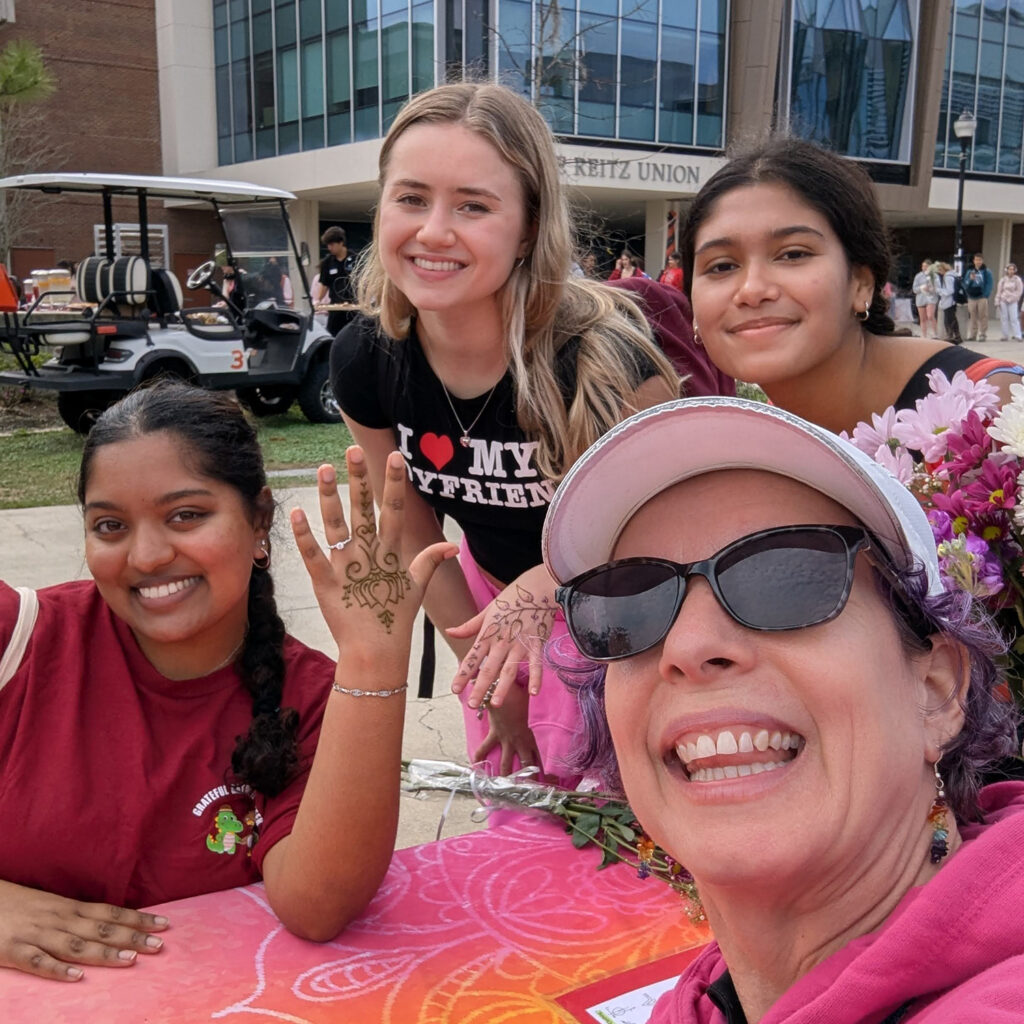
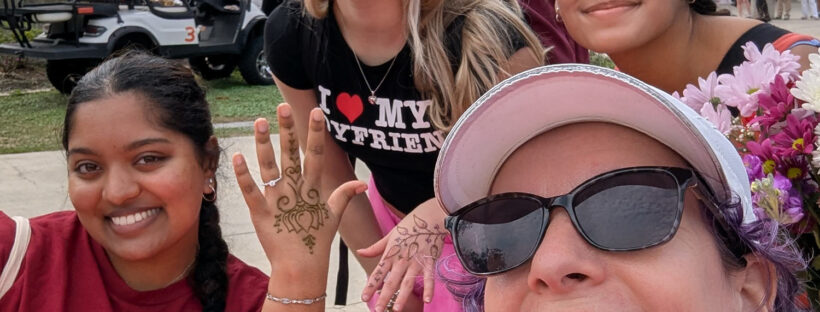
Jody with 3 students getting henna at a campus Valentine event.

How Many Students Can Get Henna at a College Event?

One of the first questions campus coordinators ask us at The Henna Experience is, “How many students can actually get henna during the event?”

The answer depends on several factors, but the biggest variable is design complexity.

A well-run henna station is not just about speed. It is about balancing flow, quality, and student experience in real time.


Design complexity changes event capacity

Beautiful lotus henna design with fresh wet henna on top of a hand.

One of the main variables in any henna event is how detailed the designs are.

At The Henna Experience, we offer a variety of designs that can typically be completed in about 2 to 3 minutes while still looking polished and visually impactful (like this design here). These designs serve as inspiration points, allowing our artists to create something unique for each student rather than repeating the exact same pattern over and over.

That flexibility is important because no two campus events flow exactly the same way.


Our team adjusts in real time based on traffic

One of the advantages of working with an experienced campus henna team is the ability to adapt naturally as the event changes.

Our artists are very good at “reading the room.”

When there is little or no line, we can spend more time on larger or more detailed designs. As traffic increases and lines begin to form, we seamlessly shift into faster styles that maintain strong visual impact while improving throughput.

The transition happens naturally without making the experience feel rushed or impersonal.

That balance helps maintain:

  • Steady student engagement
  • Consistent event flow
  • Positive student experience
  • Manageable wait times

A realistic planning estimate for campus events

For most college events, a good general estimate is:

Approximately 20 students per hour, per artist.

That estimate assumes:

  • Moderate-sized designs
  • Typical campus event flow
  • Standard student interaction time
  • Balanced pacing between speed and quality

Some events move faster, especially when students choose smaller designs.

Our team adjusts throughout the event to keep things moving as smoothly as possible.


More artists dramatically increase capacity

For larger campus events, adding artists can significantly improve overall participation while reducing wait times.

This is especially helpful for:

  • Welcome Week events
  • Finals week programming
  • Large cultural festivals
  • High-traffic evening events
  • Student appreciation activities

Because The Henna Experience works as a team, we can often scale staffing based on the expected turnout and goals of the event.


Good flow matters as much as speed

Students are usually happy to wait for henna if the line feels organized and movement stays consistent.

That is why event flow matters just as much as artistic speed.

Our setup is designed to:

  • Keep the process easy to understand
  • Prevent congestion around the station
  • Maintain visible progress in the line
  • Create a relaxed, welcoming atmosphere
  • give students the opportunity to learn about henna and browse designs while they wait

A calm, well-managed station creates a much better experience for both students and event staff.


The goal is meaningful engagement, not assembly-line speed

Henna works well at college events because it creates personal interaction while still functioning efficiently in high-volume environments.

The goal is never to rush students through as quickly as possible. It is to create a steady, enjoyable experience that allows students to create a lasting memory while getting beautiful body art.

That balance is one of the reasons henna continues to perform so well across campus programming.

Jody with 3 students getting henna at a campus Valentine event.

At The Henna Experience, we structure our events to maximize participation while still maintaining quality artwork, organized flow, and a positive student experience from start to finish.

For booking inquiries, visit EverythingButTheMime.com. Carol and Sheri will get you availability and quotes.

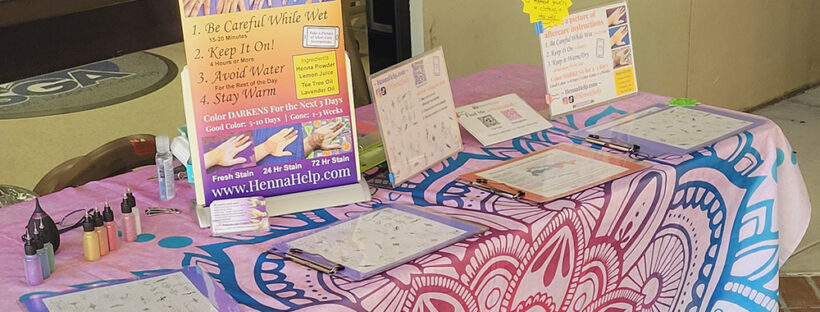
Basic henna table set up for campus events

What It’s Like to Host a Henna Event on Campus

One of the most common questions we get at The Henna Experience from campus coordinators is simple: what does the event actually look like once it starts?

That is a fair question. If you have not worked with a henna station before, it can be hard to visualize how it fits into a campus environment without creating congestion or logistical issues.

Here is a straightforward breakdown of how our events typically run.


Setup is structured and non-disruptive

Our team arrives about an hour before your event starts to set up efficiently and without interfering with the space or other programming. It only takes about 15 minutes to actually set up.

Setup includes:

  • Eye-catching layout
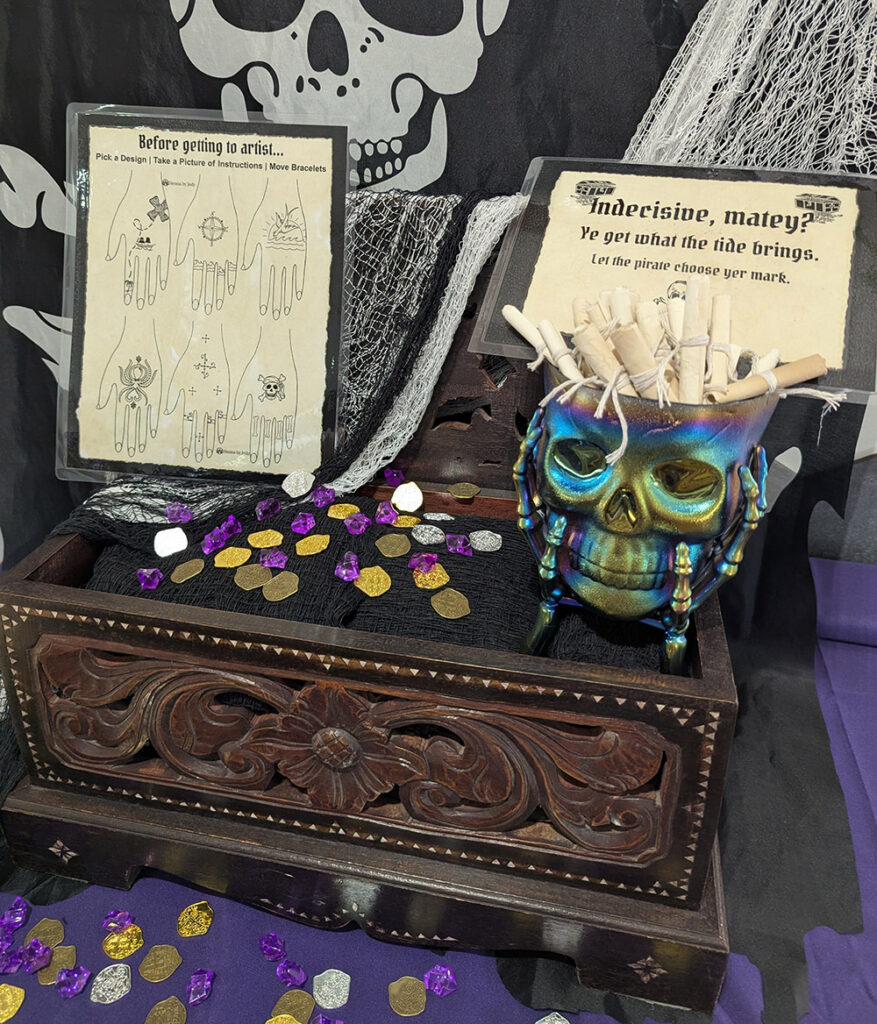
    If you have a specific theme, we do our best to match it, like this pirate themed event!
  • Clear aftercare signage
  • Clearly displayed design options with QR code for phone browsing in line

The goal is always the same. Be fully prepared before students arrive so the event starts smoothly from the first interaction.

With your permission, we generally start about 10 minutes early to get some of the event volunteers in before the event starts.


Student flow is simple and easy to manage

Once the event opens, the process is intentionally straightforward.

Students typically:

  1. Join the line
  2. While in line, they can look at designs options, and read about henna care
  3. Get a beautiful individual henna design
  4. Continue on with their day

There are no forms, sign-ups, or additional steps required.

We handle line management and have a way to cut tth line so that no students are turned away at the end of the event.

From a coordinator standpoint, this simplicity is important. It keeps participation moving without requiring active management from campus staff.


Design choice and speed

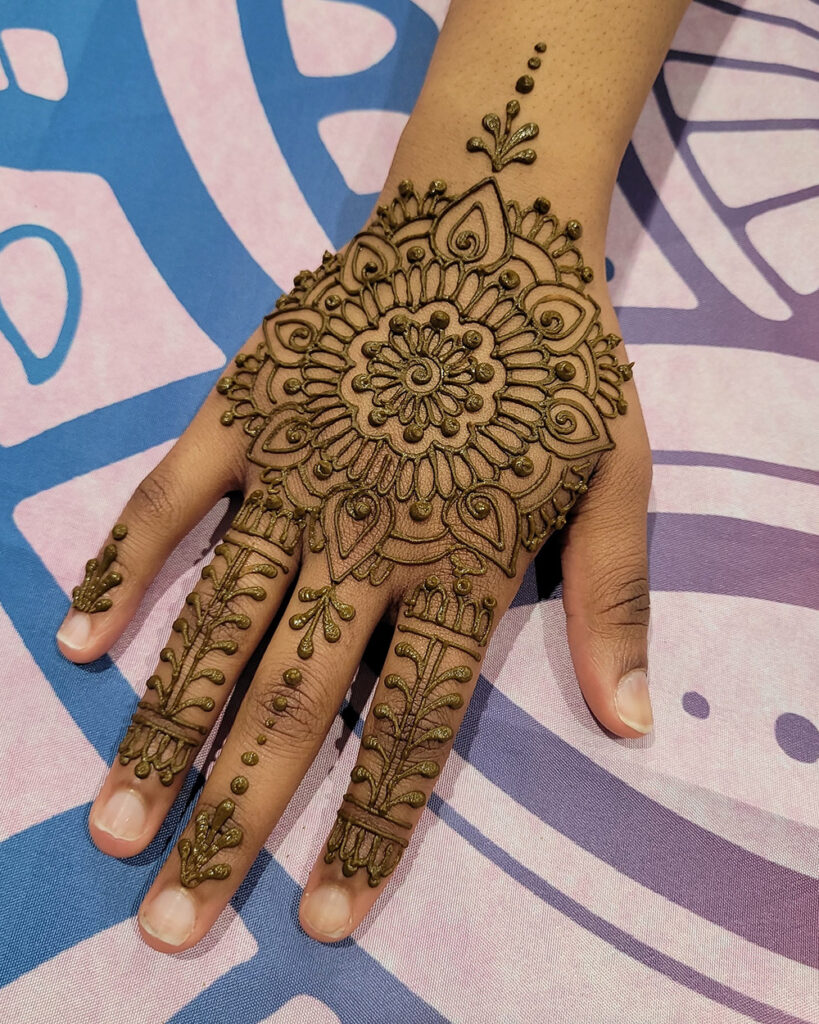
One of the main variables in any henna event is design complexity. We offer a variety of designs that can be completed in 2-3 minutes, such as this one.

Using these designs as inspiration, we create something unique for each person. Our team is good about reading-the-room. When there is no line, we can do larger or more detailed designs, and when a line develops we seamlessly merge to faster work, while maintaining a good student experience.

This allows for steady engagement while still giving students meaningful designs.

This allows for steady engagement while still giving students meaningful designs. We can generally assume 20 students per hour per artist.


Student experience stays consistent even in high volume

Even during busy periods, the experience remains calm and memorable.

Henna naturally creates a brief pause in a student’s day. That small moment of individual attention is often what makes the experience memorable, even in high-traffic environments.

We structure our flow so that speed and experience stay balanced, rather than sacrificing one for the other.


Breakdown is efficient and contained

At the end of the event, teardown is quick and organized taking about 15 minutes.

We handle full cleanup of our station and materials, leaving the space as it was found. There is no disruption to campus facilities or staff required.

Coordinators typically note that the event requires less oversight than expected, especially compared to other high-engagement programming options.


What campus coordinators usually want to know

Across multiple events, the same practical concerns come up:

  • Will this create congestion in the space?
    We can easily manage the line to work into any event space.
  • How many students can realistically be served?
    Will a consistent line of cooperative students, 20 students per hour.
  • How much staff support is needed?
    None! We do it all!
  • How smooth the flow will be in real time?
    Smooth enough that you won’t even need to think about us during the event.

With proper setup and structured flow, henna functions as a self-contained engagement station serving about 20 students per hour. It draws participation without creating operational strain on campus teams.

That is the standard we build for at every event.


If you are exploring campus programming options and want something that is interactive, visually engaging, and easy to integrate into existing events, henna continues to be one of the most reliable novelties avaialable.

For booking inquiries, visit EverythingButTheMime.com. Carol and Sheri will get you availability and quotes.